


How to Build Muscle After 50 Without a Gym
Updated: Aug 1
You don't need a gym membership, a rack of equipment, or an hour you don't have to build real strength after 50. What you need is consistency, a little know-how, and a reason to believe your body can still get stronger, because it absolutely can.
Why Muscle Matters More Now Than It Ever Did
Muscle isn't just about how you look. It's the tissue most directly tied to your metabolism, your balance, your bone density, and your independence as you age. Starting in your 30s, and accelerating through perimenopause and menopause, your body naturally loses muscle if you're not actively working to keep it. The good news is that muscle responds to strength training at any age. Your body hasn't lost the ability to build it, it just needs the right kind of signal.
You Genuinely Don't Need a Gym
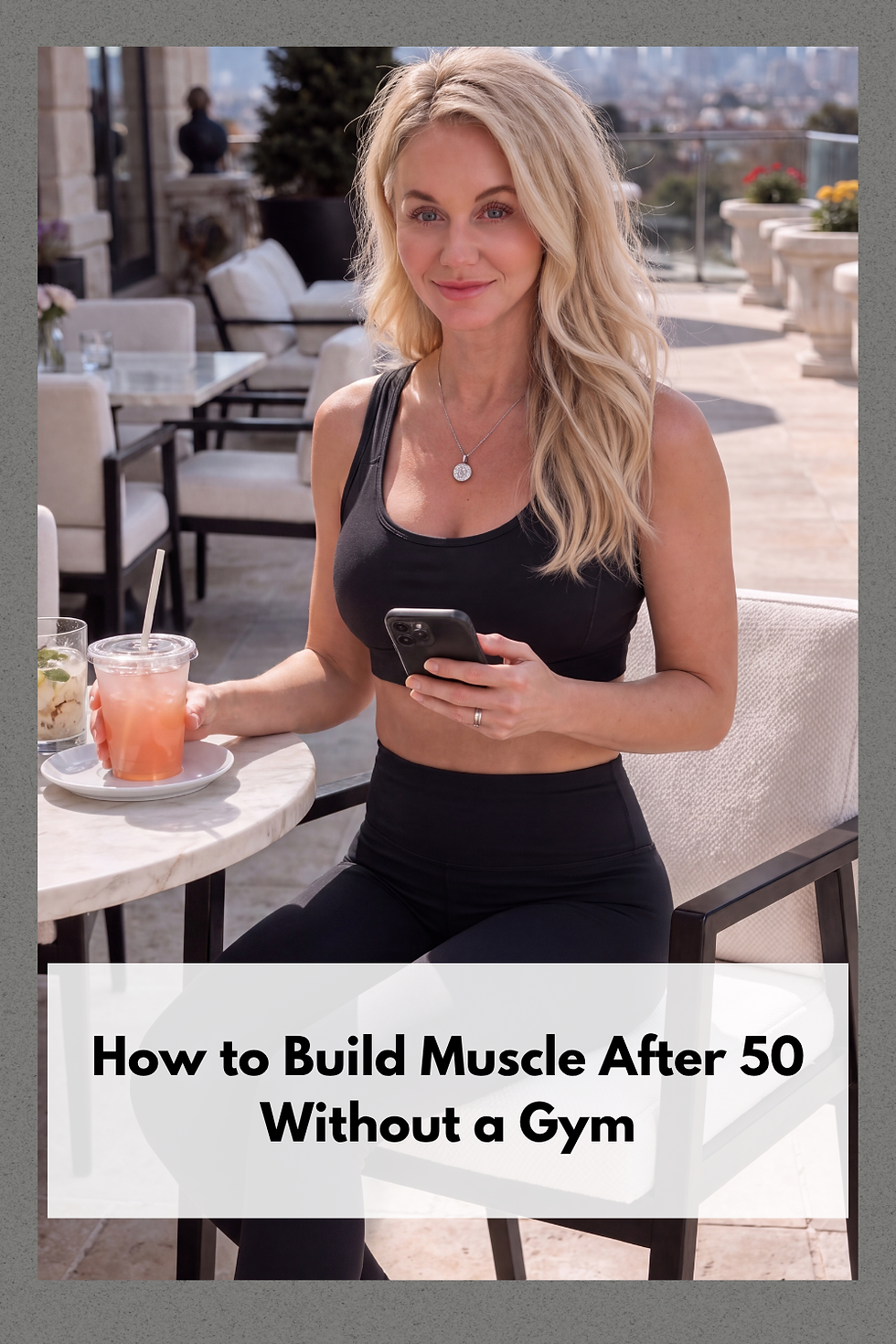
I know gyms can feel intimidating, especially if you haven't set foot in one in years, or ever. The truth is, resistance training doesn't require machines. It requires resistance, and that can come from your own body weight, a set of dumbbells, or a resistance band you keep in a drawer.
The Four Moves That Cover Almost Everything
If you're starting from home, you don't need twenty different exercises. You need a handful of moves that work multiple muscle groups at once.
Squats build strength through your legs and glutes, the largest muscle groups in your body, and directly support balance and bone density.
Push-ups, modified on your knees or against a wall if needed, build upper body strength through your chest, shoulders, and arms.
Rows, using a resistance band anchored to a door, or a pair of dumbbells bent over, build the back muscles that counteract the forward-hunching posture so many of us develop at desks.
Planks build core strength without the strain that traditional sit-ups put on your lower back, and a strong core supports nearly everything else you do physically.
Two to three sets of each, two to three times a week, is enough to see real change over time. Consistency matters far more than intensity when you're building a foundation.
Protein Is Doing Half the Work
Strength training tells your body to build muscle. Protein gives it the raw material to actually do it. Most women in midlife are eating less protein than their bodies need to support muscle repair and growth, often without realizing it. Aim to include a protein source at every meal, not just dinner. If you want an easy, no-cook option to build a habit around, my Green Goddess Lettuce Wraps deliver 40 grams of protein per wrap and take minutes to put together.
Recovery Is Not Optional
This is the piece that gets skipped most often. Muscle isn't built during your workout, it's built during recovery, while you sleep and rest between sessions. If you're not sleeping well, your body doesn't have the window it needs to actually repair and rebuild. I wrote a full breakdown of why this matters so much in midlife in why restorative sleep matters so much, if that's a piece of the puzzle you've been missing.
Where Bioactive Peptides Fit In
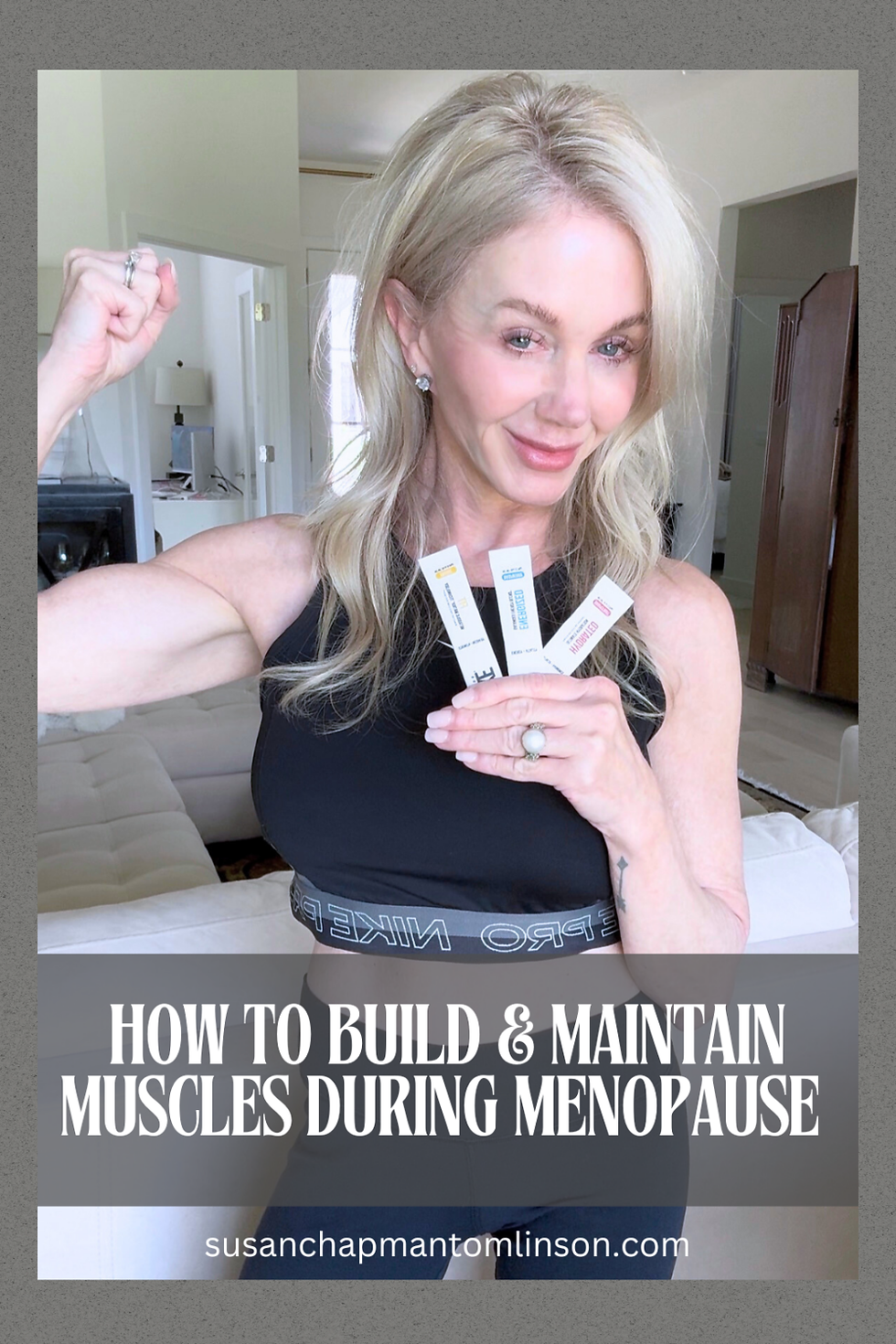
For me personally, this is where peptides became part of the picture. Rather than replacing strength training or protein, they support the body's own repair signals, the same natural processes that slow down as we age. I go deeper into how this works in what are peptides and why you should consider using them.
My Own Experience
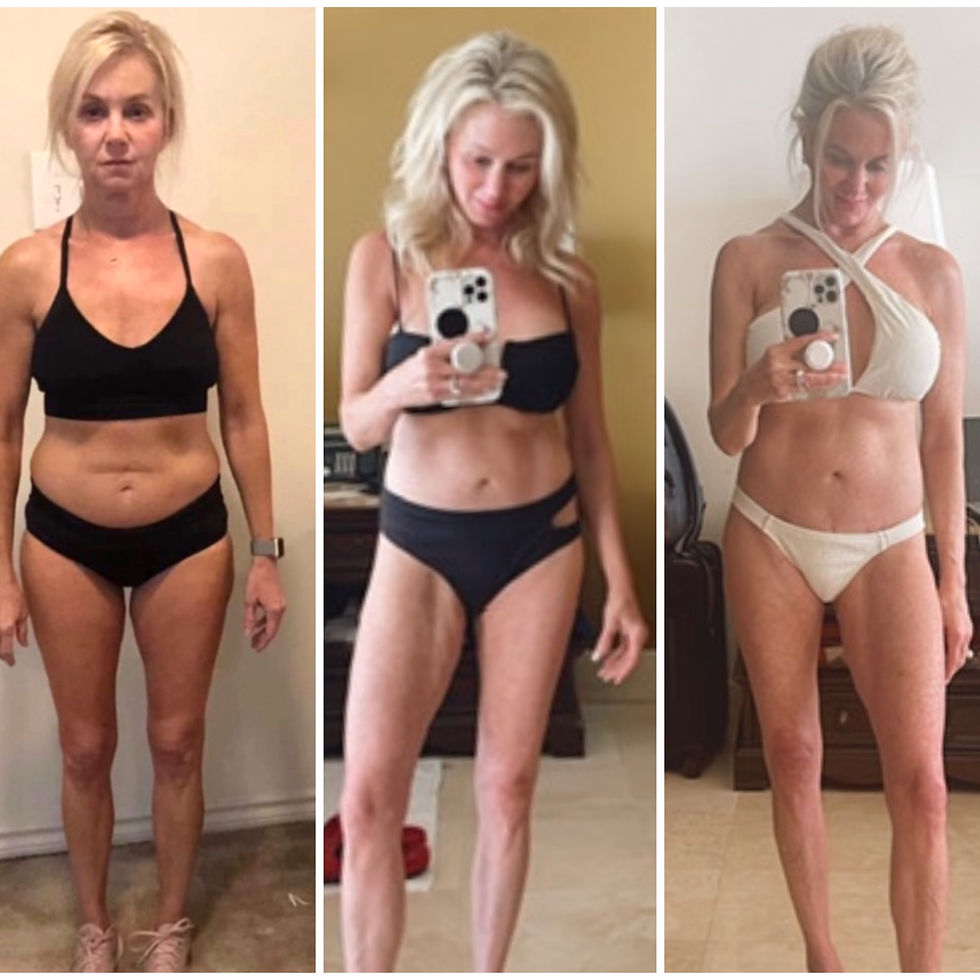
I started exactly where you might be starting, unsure whether my body could still build strength after everything it had been through. I train four times a week now with my husband Robert, an orthopedic surgeon, and over nine months of combining strength training, adequate protein, and natural peptide support,
I gained 5% lean muscle.
Increased my bone density by 2%.
I'm genuinely healthier in my 60s than I was in my 40s and 50s, and it started with exactly the kind of simple, at-home movements I just walked you through.
A Simple Way to Track Progress
You don't need fancy equipment to know it's working. Notice whether you can do one more push-up than last month, whether the stairs feel a little easier, whether carrying groceries in one trip feels less like a negotiation with your body. Muscle takes up less space than fat, so your clothes fitting differently is often the first sign, sometimes well before any number changes.
Start Where You Are
You don't need to overhaul your life to start building muscle after 50. You need four exercises, a little protein at each meal, and a commitment to showing up two or three times a week. Your body is far more capable of change than most of us were ever told.
Want to learn more? Download my Free Guide



Comments