


LEAN PEPTIDE AND MY MENOPAUSE BODY COMPOSITION STORY AT 61
- Susan Chapman Tomlinson

- Jul 22
- 3 min read
Updated: 1 day ago
Here's what nobody tells you about the fat that shows up after 40: it's not the same fat you dealt with in your 20s and 30s.
I know because I fought mine for years. Eating clean. Strength training four times a week with my husband Robert, who's an orthopedic surgeon and knows a thing or two about how bodies actually work. Cutting carbs. Watching the scale barely move while my waistline told a different story.
If that sounds familiar, I want you to hear this clearly: it was never a willpower problem. It was a signaling problem. And once I understood that, everything changed, including the way I think about my own body.

The belly fat that shows up in midlife isn't just extra padding. A lot of it is visceral fat, the kind that settles around your organs rather than just under your skin. It's more metabolically active than the fat you carried at 25, which is part of why it feels so stubborn.
Here's what's actually happening underneath the surface. As we move through perimenopause and menopause, the cellular signals that used to tell your body how to use fat for fuel, build lean muscle, and regulate metabolism start getting weaker. Your body isn't failing you. It's not getting the memo as clearly as it used to.
So you can do everything "right," clean eating, consistent workouts, cutting calories, and still feel like your body isn't responding the way it used to. That disconnect is exhausting. I lived it.
Override vs. Restore
Most quick fixes on the market try to override your body. Stimulants that force your metabolism into overdrive. Appetite suppressants that shout over your natural hunger signals instead of working with them. None of that felt right to me, and none of it addressed what was actually going on.
What I was looking for wasn't a shortcut. It was something that worked with my body's own intelligence instead of against it. That's what led me to bioactive peptides, and specifically to LEAN.
What LEAN Actually Does
Peptides are short chains of amino acids that act like messengers, communicating directly with your cells. Think of them as a way of resending signals your body has quietly stopped receiving as clearly with age.
LEAN is formulated to support your body's own fat metabolism, particularly around that stubborn visceral fat, and to help support healthy insulin signaling so your body can use fat for fuel more efficiently. It's not a stimulant. There's no jittery crash. It's not asking your body to do something foreign. It's giving your cells the natural support they need to do what they already know how to do.
That distinction mattered to me. I've never wanted to put something synthetic in my body when a gentler, more natural option exists.
My Own Body Composition Story
I'll tell you exactly what changed for me, because these are my own documented results, not a promise of what will happen for you.
Over nine months, at 61 years old, I lost 4.5 inches of visceral belly fat and gained 5% lean muscle. My bone density increased by 2%. And for the first time in a long time, my health score came back better than 95% of women my age.
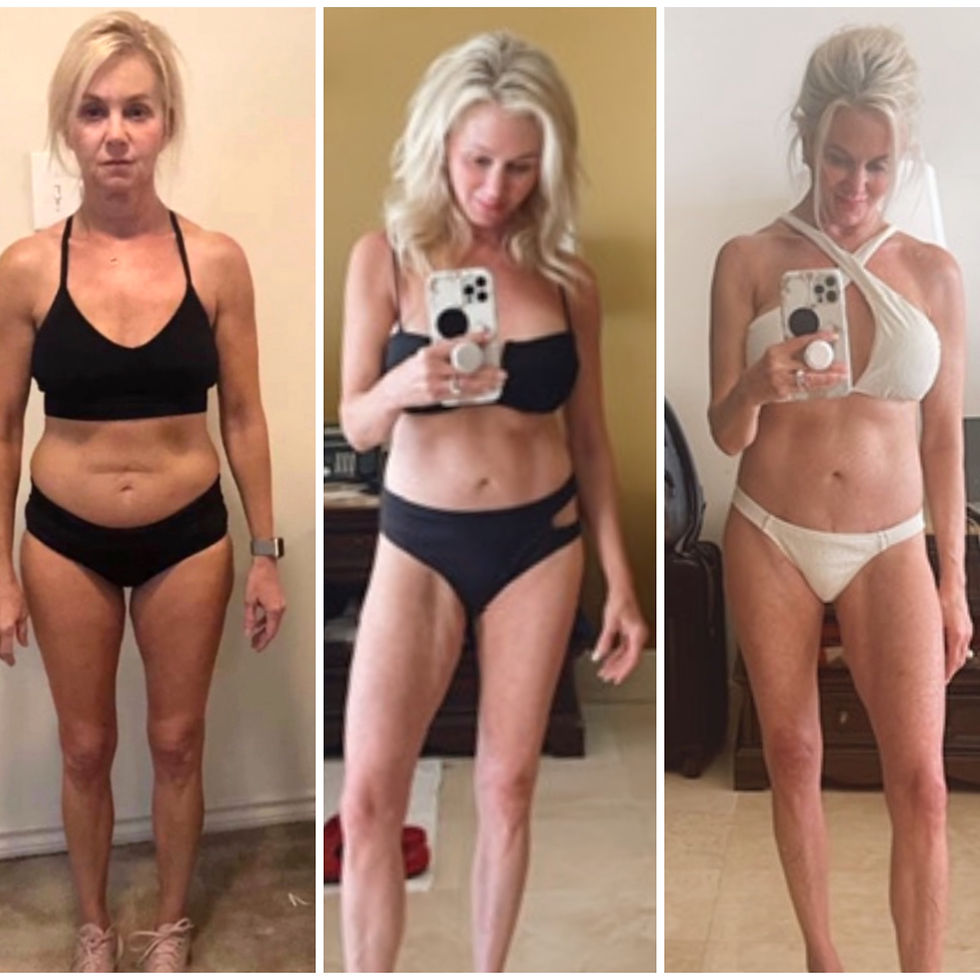
I didn't get there through extreme dieting or by white-knuckling my way through another restrictive plan. I got there by supporting my body's own signaling instead of fighting it, alongside the strength training Robert and I already do together four times a week.
This is my story, and I'm still living it. I'm not here to tell you it will look identical for you, because every body and every season of midlife is different. But I can tell you what it felt like to finally stop fighting my own biology.
Who LEAN Is For
If you're a woman 40 or older who has been doing "all the right things," eating well, training consistently, prioritizing sleep, and your body composition still isn't shifting the way you'd expect, LEAN was built with you in mind. It's not a replacement for the fundamentals. It's support for the signaling that fundamentals alone can't always restore once your body's communication system starts to change with age.
If you're currently on a GLP-1 medication, this isn't a replacement for that conversation with your doctor. Peptides and medication work from different philosophies, restore versus override, and any change to a prescribed medication should always go through your physician.
A Gentle Next Step
If any part of this sounds like your own story, you're not imagining it, and you're not broken. Your body just needs a different kind of support than the one you've been reaching for.
If you're ready to see whether LEAN might be a fit for where your body is right now, you can find it through my link here:




Comments