


Feeling Off? 10 Signs of Perimenopause Most Women Miss
Updated: Oct 18
For years, I knew something about my body had changed. From 54 to 60, I struggled with stubborn fat around my waist, tried different approaches, and still felt stuck. I did not need another lecture about trying harder. I needed a routine that made sense for the body I was living in.
That is why I take the words “I just don’t feel like myself” seriously. Whether your concern is your waistline, your sleep, your strength or simply feeling off, my message is this: pay attention, get answers, and stop treating your health as something you will deal with later.
What Perimenopause Actually Is
Perimenopause is the transition leading up to menopause; changes can involve your periods, sleep, mood, concentration and body shape, not just hot flashes (The Menopause Society). You do not need to recognize every symptom on a checklist before starting a conversation about what has changed.
Menopause is generally reached after 12 months without a period, although hormonal contraception can make the timing harder to identify (NHS). I would not use a blog or a quiz to diagnose that transition, but I would use them to help you ask better questions.
Ten Changes Worth Paying Attention To
Changing periods: Cycles may become less predictable, with bleeding that is lighter, heavier, more frequent or less frequent (NHS).
Disrupted sleep: Trouble falling asleep or staying asleep can be part of the transition, sometimes alongside night sweats (NHS).
Hot flashes or night sweats: Sudden heat and sweating are familiar signs, but they are not the whole story (The Menopause Society).
Mood changes: Irritability, anxiety, low mood or feeling more emotional can occur during these years (NHS).
Brain fog: Changes in memory and concentration can leave familiar tasks feeling harder (NHS).
Tiredness after poor sleep: Sleep disruption can spill into the next day, affecting how you feel and function (NHS).
A changing waistline: Weight gain and a shift toward abdominal fat can happen in midlife, with aging, hormones and lifestyle all contributing (The Menopause Society).
Achy muscles or joints: New stiffness and aches can accompany the menopause transition (NHS).
Vaginal or bladder changes: Dryness, discomfort, urinary urgency and leakage deserve attention rather than embarrassment (The Menopause Society).
Drier or itchier skin: Skin changes can be another part of the picture (NHS).
My advice is to write down what you notice, when it started and what interferes with your day. Bring that record to your healthcare appointment instead of trying to remember everything in the moment.
Weight Loss and Body Composition Are Not the Same Goal
Yes, we can talk about weight loss. If that is one of your goals, I want the conversation to include strength, muscle and health, not just a smaller number on the scale.
The Menopause Society identifies muscle loss with aging and a shift toward abdominal fat around menopause as important parts of the midlife picture (The Menopause Society). That is why my approach starts with a bigger question: what are we doing to support the body you want to keep living in?
My concern was the fat around my waist and what it meant for my health. I wanted to change my body composition, feel stronger and stop feeling stuck, rather than chase weight loss at any cost.
What Changed for Me at 60
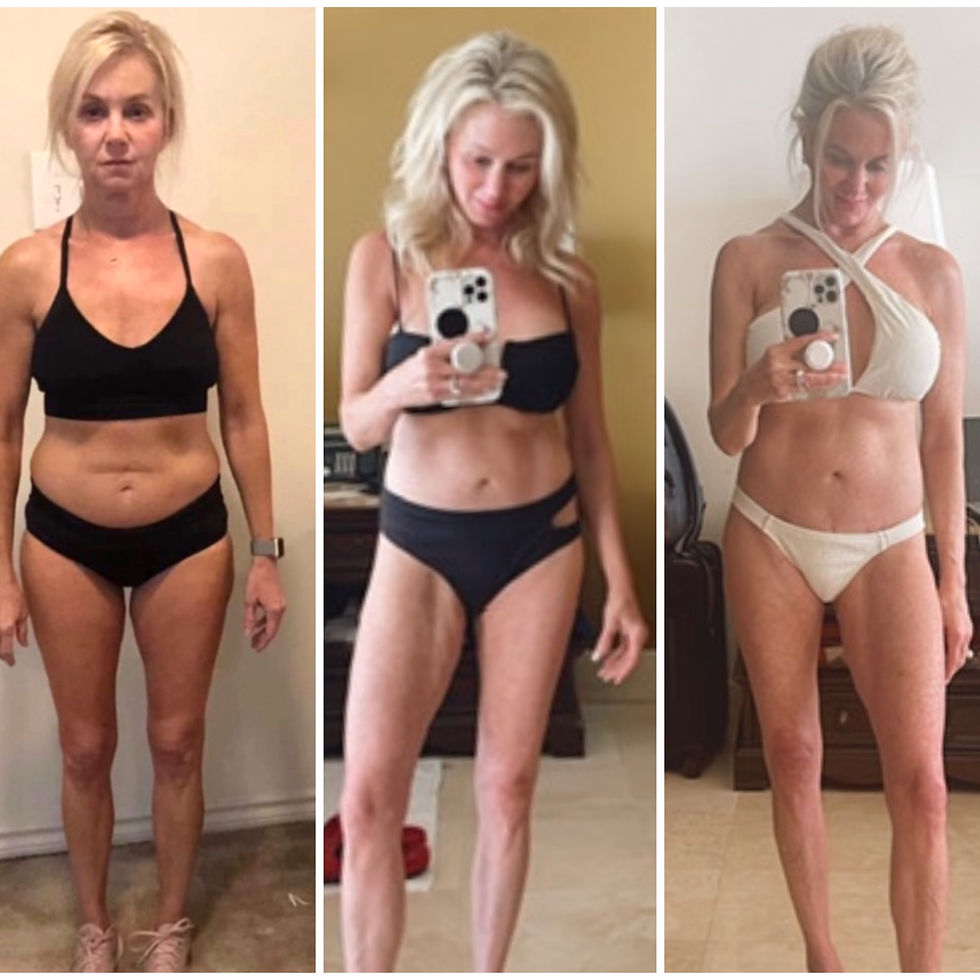
At 60, I added bioactive precision peptides to my daily routine, alongside protein-focused eating and strength training. That was the turning point in my own experience after years of frustration.
By four months, I had lost 3½ inches from my waist. By month six, the total was 4½ inches. Those are my waist measurements, not a measurement of how much visceral fat I lost.
Now, at 62, I have kept those inches off and reached the weight and size where I feel my best. I genuinely feel better in my 60s than I did in my 30s and 40s. Today, my goal is to maintain that progress.
Protein plus peptides became an important part of the routine that finally felt right for me. I am not interested in going back to measuring success by the scale alone.
My Wellness Routine Has Three Distinct Jobs
MAKE has two separate categories: our original wellness Bioactive Precision Peptides and our newer Precision Skincare/Beauty line.

FIT: support the muscle you want to keep. MAKE formulates FIT with its Metabolic Matrix featuring PeptiStrong PLUS to support muscle protein synthesis, strength and recovery (MAKE FIT overview). For me, FIT belongs alongside protein and resistance training, not instead of them.
LEAN: support your weight-management and body-composition goals. MAKE describes the enhanced LEAN formula as supporting appetite, cravings, fat metabolism and healthy body composition; its stated design goals also include targeting visceral fat (MAKE enhanced LEAN overview). That is the manufacturer's description of the formula, not a measured visceral-fat result for every person who takes it.
The enhanced formula includes hops extract within its Apticurb Trimfast Complex, alongside natural peptides (MAKE enhanced LEAN overview). My original results happened before this newer enhancement, so I do not credit a newly added ingredient with changes I experienced two years ago.
RESTORED: make nighttime recovery part of the plan. MAKE positions RESTORED as support for the body's natural sleep rhythm, including deep and REM sleep (MAKE RESTORED overview). It is the nighttime part of my routine, not a product I present as a stand-alone weight-loss treatment.
That is why I like discussing the three together: muscle, appetite and metabolic support, and sleep. My recommendation is a deliberate routine you can follow consistently, not a collection of products with no clear purpose.
Progress Is Personal, and It Deserves an Honest Story
I want to show you other people's progress, not just my own. We have thousands of women and men who chose to use natural peptides vs GLP-1 synthetics .


Natural Peptides and GLP-1s: Know the Difference
The natural origin of MAKE's peptides is part of what interests me: for example, MAKE identifies fava beans as the source of the peptides used in FIT (MAKE peptide science). But I want you to understand the distinction, not confuse a wellness supplement with a prescription treatment.
Prescription GLP-1-based medicines are used for weight management in appropriate patients, may be continued long-term, and can have side effects; some weight regain is common after stopping weight-management medication (NIDDK). I would not use someone else's photograph to tell you to stop a medication or claim a supplement produces the same results.
My recommendation remains clear: make protein, muscle, daily movement and sleep central to your plan, then consider targeted support that fits your goals and medical situation. FIT, LEAN and RESTORED are the wellness products I want you to understand, with their separate roles rather than a blanket promise.
Build a Routine You Can Actually Keep
Protein-rich meals, regular movement and strength training are foundational tools for managing midlife weight and preserving muscle (The Menopause Society). Here is where I would begin:
Start with breakfast: Choose a protein source before deciding what else goes on your plate.
Put strength on your calendar: Make it a real appointment, not something you squeeze in if there is time.
Protect your evenings: Give your bedtime routine the same attention you give your morning coffee.
Track more than pounds: Bring your waist measurements, and strength progress.
If you need a practical starting point, use one snack idea from my guide this week. Keep it simple enough to repeat.
Get Clear on Your Next Step
My Feeling Off quiz is a starting point for reflection, not a diagnosis. Use it to organize what you are noticing and decide which questions you want to explore.

The Real Takeaway
You do not have to settle for a routine that leaves you frustrated. My own turning point at 60 was taking my body composition seriously and building a consistent approach around protein, strength training and bioactive precision peptides.
At 62, I am focused on keeping what I worked for. Whether your next goal is weight loss, a stronger body or a more consistent routine, start with a clear plan rather than another round of guessing.
You can also read my free peptide guide before deciding what to explore. It is a place to start the conversation, not a commitment to buy.
© 2026 Susan Chapman Tomlinson. All rights reserved.


Comments