


Muscle Mass Is the Secret to Longevity (And What FIT Has to Do With It)
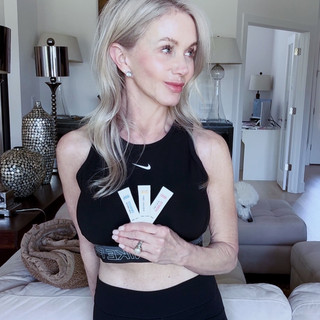
You don't get old simply because time passes. You get old because of how you move, or stop moving, and what happens to your muscle along the way. The day you stop exercising is often the day you start aging faster than you need to.
I know that sounds bold. But once you understand what muscle actually does for your body as you age, and what I personally went through this past year, it stops sounding dramatic and starts sounding obvious.
Muscle Isn't Vanity, It's Infrastructure
We tend to think of muscle as something for looking toned or fitting into jeans. In midlife and beyond, muscle is closer to infrastructure than aesthetics. It's what keeps you steady on stairs, what lets you get up off the floor without thinking about it, what protects your joints, supports your bone density, and regulates your metabolism every single day, not just on workout days.
Starting in your 30s, your body naturally begins losing muscle mass if you're not actively working to preserve it, and that loss accelerates through perimenopause and menopause. This isn't a character flaw or a sign you're not trying hard enough. It's biology. But biology responds to what you do about it.
Why Menopause Makes This So Much Harder
Here's something I wish someone had explained to me years ago. As estrogen declines during perimenopause and menopause, your body naturally shifts toward losing muscle more easily and storing more visceral fat around your midsection, even if your diet and exercise habits haven't changed at all. This is a hormonal and physiological shift, not a reflection of effort or willpower. Diet and movement still matter enormously for how you feel and function, but the underlying shift itself is your biology changing beneath you.
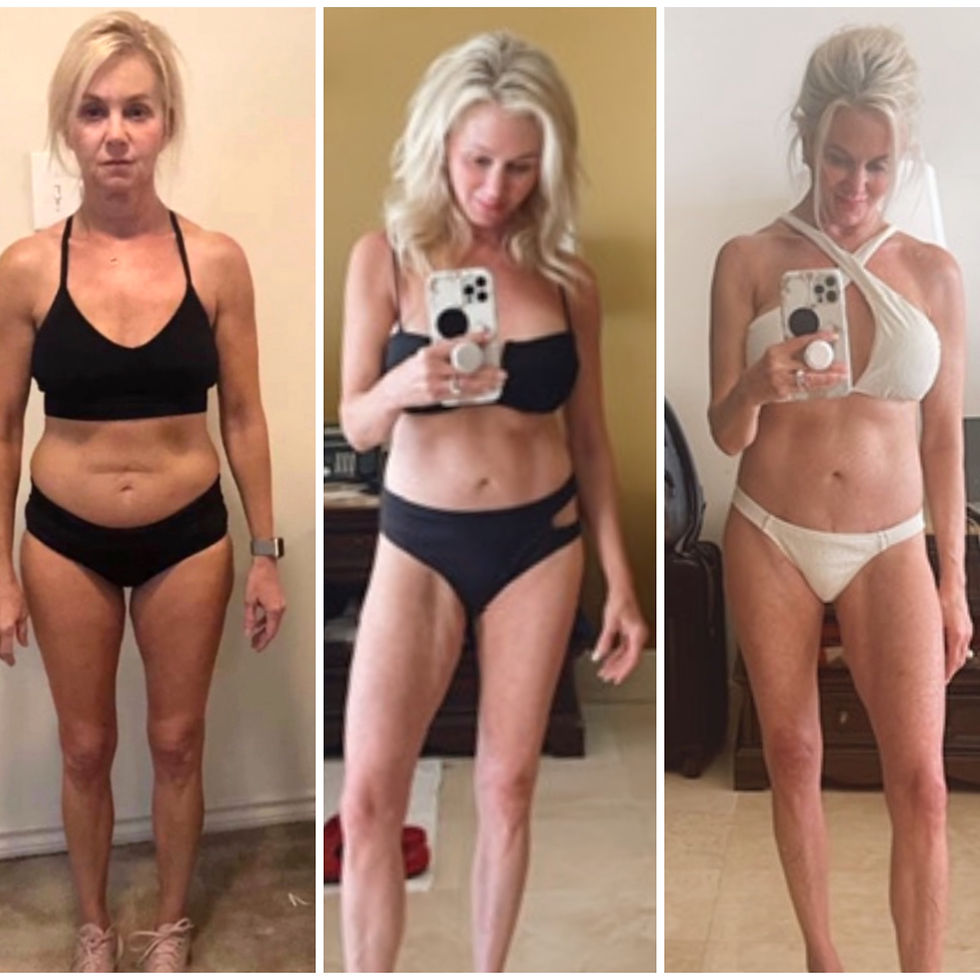
This is exactly why building and protecting muscle becomes so important in this season. The stronger your muscle foundation going into menopause, and the more support you give your body to maintain it, the easier it becomes to hold onto that muscle, and even continue building it, instead of watching menopause belly fat creep in.
Why This Isn't About the Scale
This is where a simple picture says more than words ever could. Two pounds of muscle and two pounds of fat weigh exactly the same, but muscle takes up significantly less space in your body than fat does. This is why two women can weigh the same number on the scale and look completely different, and why you can gain muscle, lose fat, and barely see the scale move while your clothes fit differently and your midsection visibly changes. This is the entire idea behind body composition. It's not about chasing a lower number, it's about changing what your body is actually made of.
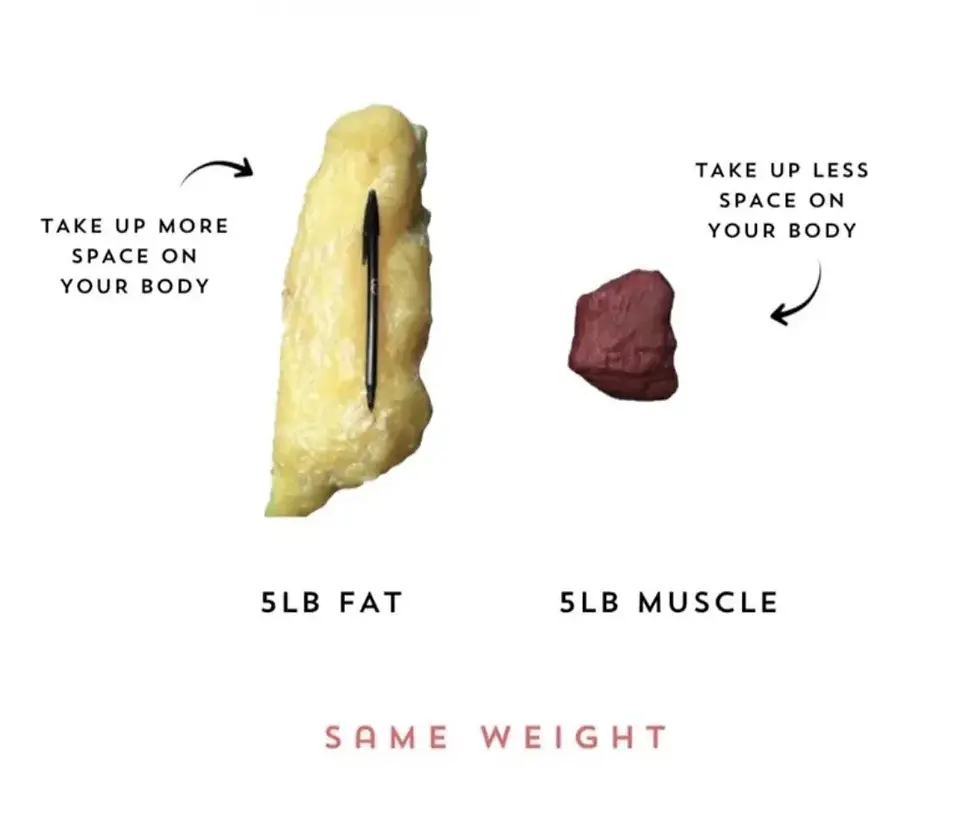
This matters even more in menopause, when your body is already inclined to store more fat and hold onto less muscle. Every bit of muscle you build or preserve is working against that shift, not just for how you look, but for your metabolism, your strength, and your long-term independence.
What Actually Happens Inside Your Muscle as You Age
As we age, our bodies produce more myostatin, a protein that acts as a biological brake on muscle growth. The more myostatin your body produces, the harder it becomes to build and maintain muscle, even if you're doing everything right in the gym. Muscle protein synthesis, the process your body uses to actually repair and build new muscle tissue, also becomes less efficient with age. This is part of why the same workout that built muscle easily in your 30s can feel like it's producing less in your 50s and 60s.
This is exactly the problem FIT was designed to help address.
How FIT Works With Your Body

FIT is a bioactive peptide complex sourced from fava bean hydrolysate, containing two specific peptides discovered and validated using an AI-driven research platform. In published research, these peptides helped reduce myostatin, the biological brake that slows muscle growth as we age, meaning your body has an easier time building and holding onto muscle in response to the work you're already putting in.
The research also showed something that became deeply personal to me this year. In published studies, these peptides supported significantly greater muscle protein synthesis during periods of remobilization after immobilization, in other words, exactly the kind of recovery your body has to do after surgery or an injury, when you physically cannot train the way you normally would.
My Own Story This Year
This past year tested everything I believed about muscle and recovery. I had two major surgeries. After the first, I couldn't work out for three to four weeks. After the second, it was six weeks. For most of my life, that kind of forced downtime would have meant real, visible muscle loss, the kind that's hard to earn back.

It didn't happen this time. I maintained my lean muscle through both recovery periods without the loss I expected, and I genuinely believe consistent protein intake alongside FIT played a real role in that. I share this not to say FIT replaces smart recovery or your doctor's guidance, it doesn't, and it works alongside both. I share it because it changed how I think about what's possible during the seasons of life when working out simply isn't an option.
Would It Change Things If You Had Support Like This?
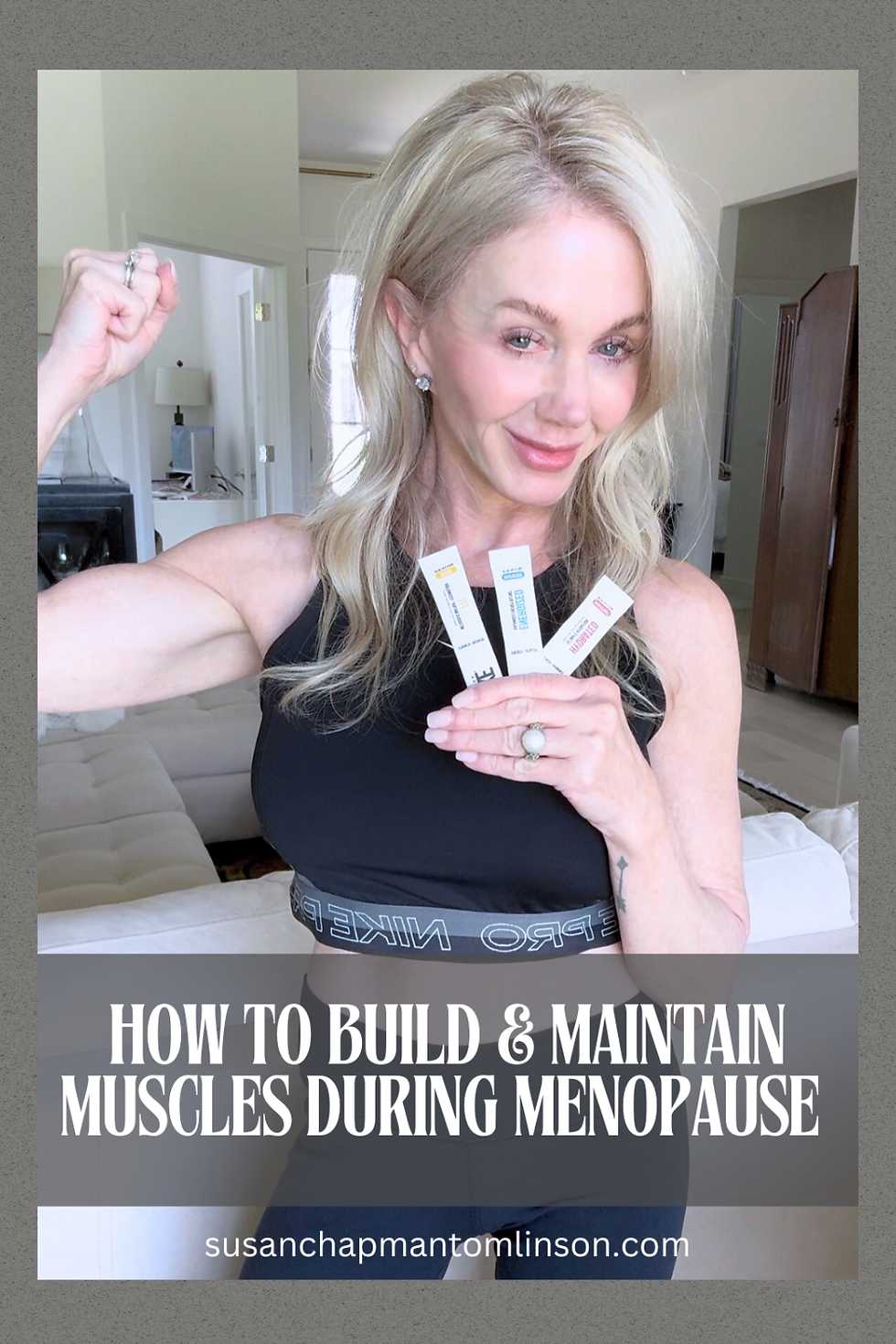
Imagine going into menopause, or into a season of forced rest like surgery or injury, knowing your body has an easier time holding onto the muscle you've worked so hard to build. That's the shift FIT made for me. I train four times a week with my husband Robert, an orthopedic surgeon, and over nine months of combining consistent strength training, adequate protein, and FIT, I gained 5% lean muscle and increased my bone density by 2%. My health score is now better than 95% of women my age, and I genuinely feel stronger in my 60s than I did in my 40s, surgeries and all.
The Real Takeaway
You don't get old simply because time passes. You get old because of what you do, or don't do, to protect the muscle that keeps you capable, strong, and independent. Menopause changes the rules on you through no fault of your own, and life sometimes takes the choice to work out away from you entirely. What matters is having the right support in place for both.
Muscle is the organ of longevity. Protect it like it matters, because it absolutely does.
Want to learn more about the science behind bioactive peptides? Learn more about peptides here.
© 2026 Susan Chapman Tomlinson. All rights reserved.



Comments